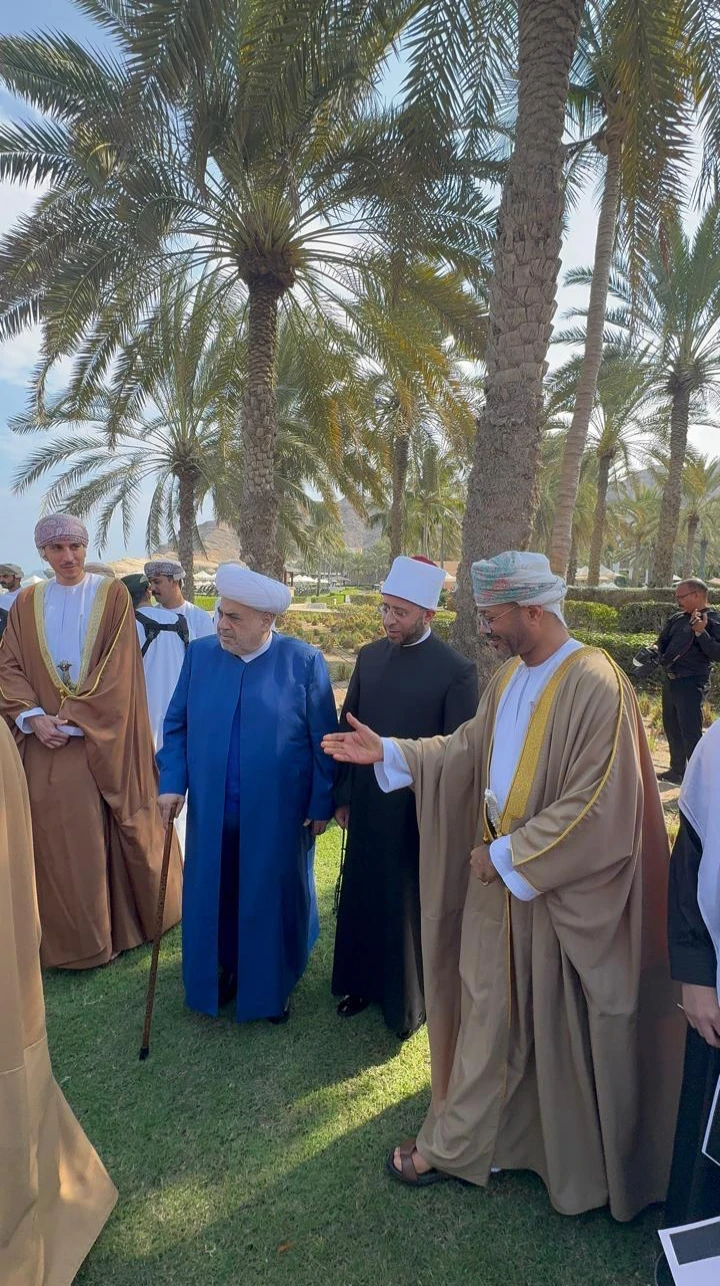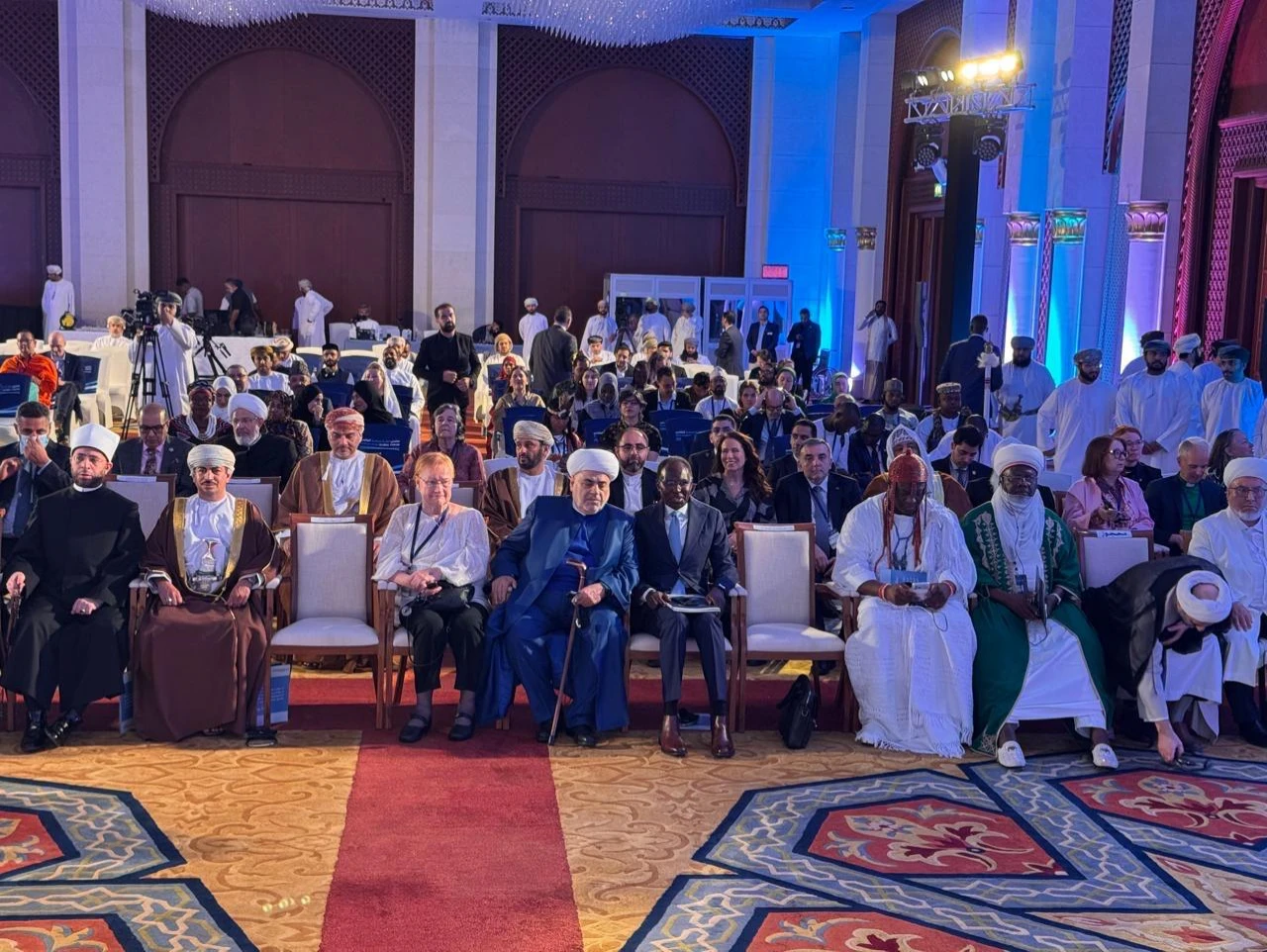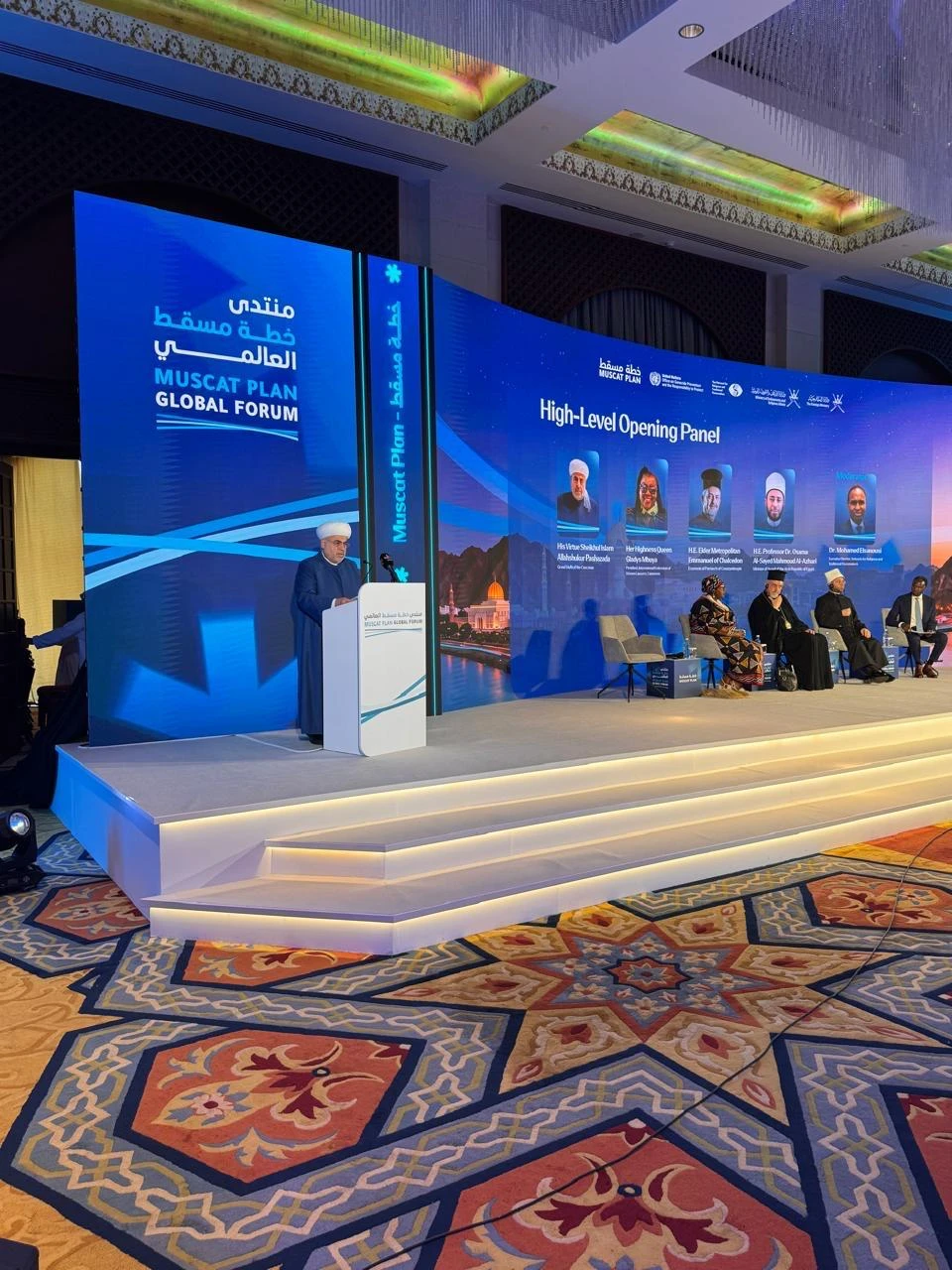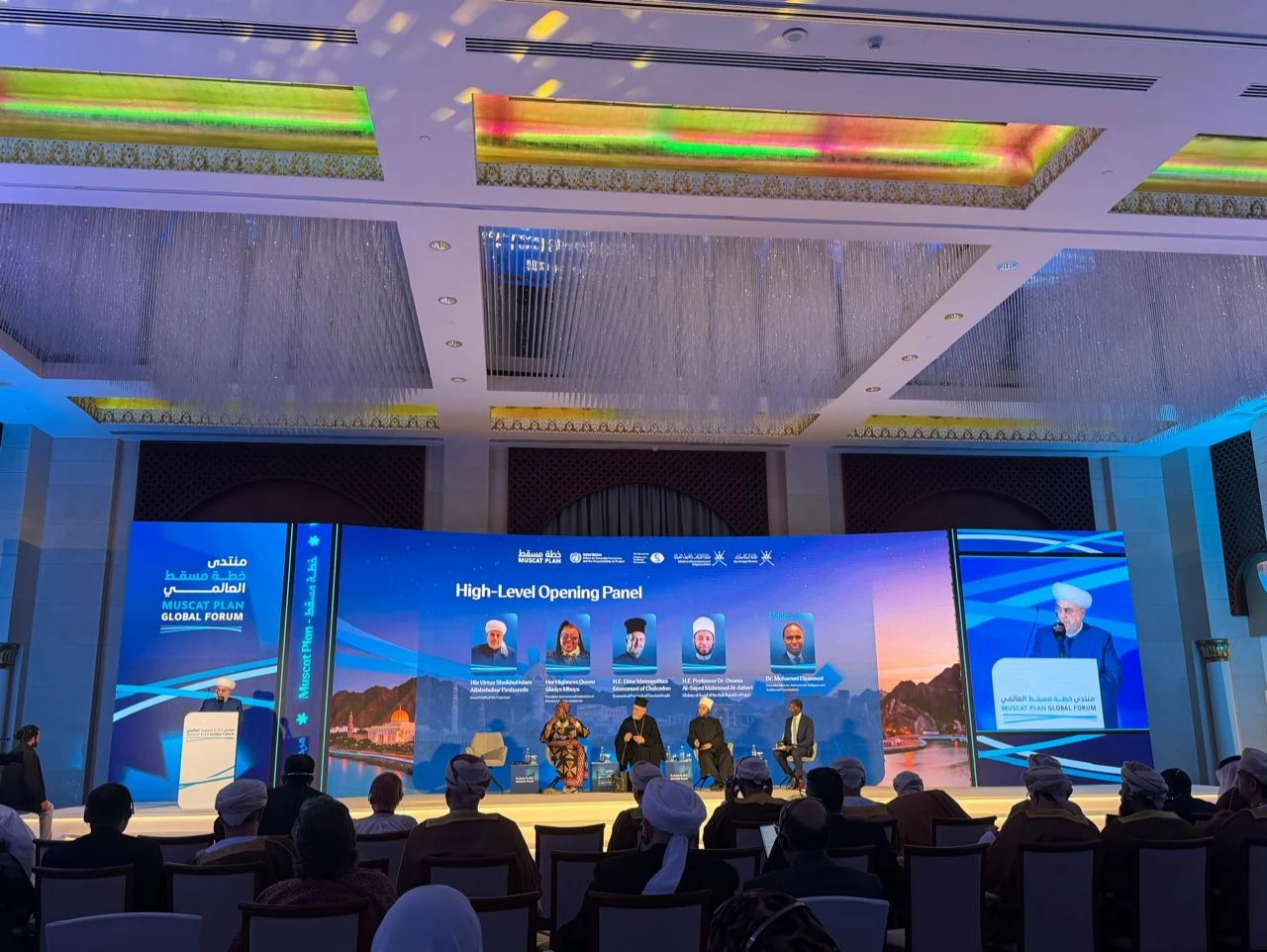
Sheikh-ul-Islam A. Pashazade, Chairman of the Caucasus Muslims Board, took part in the Muscat Plan of Action Forum, held on 15–16 November in Muscat, the capital of Oman.
The Muscat Forum is an international platform dedicated to the "Muscat Plan of Action for Traditional and Indigenous Leaders and Peoples in Countering and Addressing Hate Speech and Preventing Genocide and Atrocity Crimes and their Incitement through Peace Mediation". The Plan was prepared jointly by the Sultanate of Oman, the Office of the UN Special Adviser on the Prevention of Genocide (UNOSAPG) and the Network for Religious and Traditional Peacemakers, and was launched by UN Secretary-General António Guterres.
The Forum brought together more than 70 traditional and Indigenous leaders from 40 countries, as well as religious leaders, government representatives, UN agencies and peacebuilding practitioners. On 16 November, the UN International Day for Tolerance, Sheikh-ul-Islam A. Pashazade spoke in the Forum's High-Level Opening segment, dedicated to the presentation of the global implementation framework of the Muscat Plan of Action. He conveyed the greetings and blessings of the Head of our State, His Excellency President Ilham Aliyev, to the distinguished religious, state and public figures taking part in the Forum. He also prayed to the Almighty Creator to bless the work of this important event and its efforts and endeavours for peace.
Sheikh-ul-Islam A. Pashazade said that to save human life, the greatest value created by the Almighty Lord, the world must be founded on the norms of international law, universal moral values and traditional religious and ethical principles. "We must never forget one supreme truth: as members of the human family created by the Almighty Lord, the values that unite and bind us are stronger and more important than the factors that distinguish and divide us. This is why cooperation between heads of state and public and religious leaders is essential to protecting peace, which stands above all other problems in today's world. I express our deep gratitude to the United Nations for its coordinating role, for its valuable efforts to deepen trust among civilizations and to promote interfaith dialogue and cooperation in the world, and for its peacemaking work to protect millions of human lives."
Sheikh-ul-Islam A. Pashazade praised the Muscat Forum as yet another important international platform that serves to develop cooperation between states, the international community and religious representatives in addressing global problems. He expressed his particular and deep gratitude to His Majesty Sultan Haitham bin Tarik Al Said of Oman for his valuable efforts in bringing about the Forum, which creates excellent opportunities for open and respectful exchange towards mutual understanding, and for hosting it at such a high level.
In his speech, Sheikh-ul-Islam A. Pashazade spoke about Azerbaijan's valuable experience: "In multi-ethnic and multi-confessional Azerbaijan, known for its historically formed traditions of tolerance, ethnic and religious diversity is regarded as a national treasure, and religious tolerance and intra-Islamic understanding are supported at state level. Our country is recognised and respected internationally as a spiritual centre of interfaith and intra-Islamic cooperation. In independent Azerbaijan, the foundations of a society built on the harmony of religious and cultural diversity were laid by the ideology of Azerbaijanism of our National Leader Heydar Aliyev, the author of the words 'A high level of tolerance is a mark of a high level of culture'. President Ilham Aliyev, who continues this successful political course, has described multiculturalism as 'both a way of life and state policy in Azerbaijan' and has established it at the level of state policy. All ideas and initiatives that serve human solidarity in the world serve the ideals of peace and coexistence. These include the Years of Multiculturalism and of Islamic Solidarity declared by President of Azerbaijan Mr. Ilham Aliyev, the Baku Process for intercultural dialogue of which he is the author, and the World Forums on Intercultural Dialogue that he initiated."
Sheikh-ul-Islam A. Pashazade stressed that there is a great need to assess the world's problems from a spiritual perspective and to present to the world a tolerant, multicultural way of life that can prevent extremism on national, racial and religious grounds. In this respect, he noted, Azerbaijan's successful model of coexistence can serve as an example for the whole world. He said that Azerbaijan's valuable historical experience of building bridges between representatives of different cultures and civilizations and of living together, and its exemplary model of tolerance and intra-Islamic understanding, may be considered a valuable example for the Muscat Process.
Sheikh-ul-Islam A. Pashazade also noted that the Azerbaijani state, having enforced the well-known UN resolutions within the framework of international law, put an end to occupation and fully restored its territorial integrity and sovereignty, which are recognised by the international community. Today it is carrying out restoration and reconstruction work and projects for the return of refugees and internally displaced persons in our liberated territories. He added: "As a people that has endured ethnic cleansing and the Khojaly genocide, we wholeheartedly support the Muscat Plan of Action, which embodies international efforts to ensure that crimes against humanity are never repeated and to establish peace."
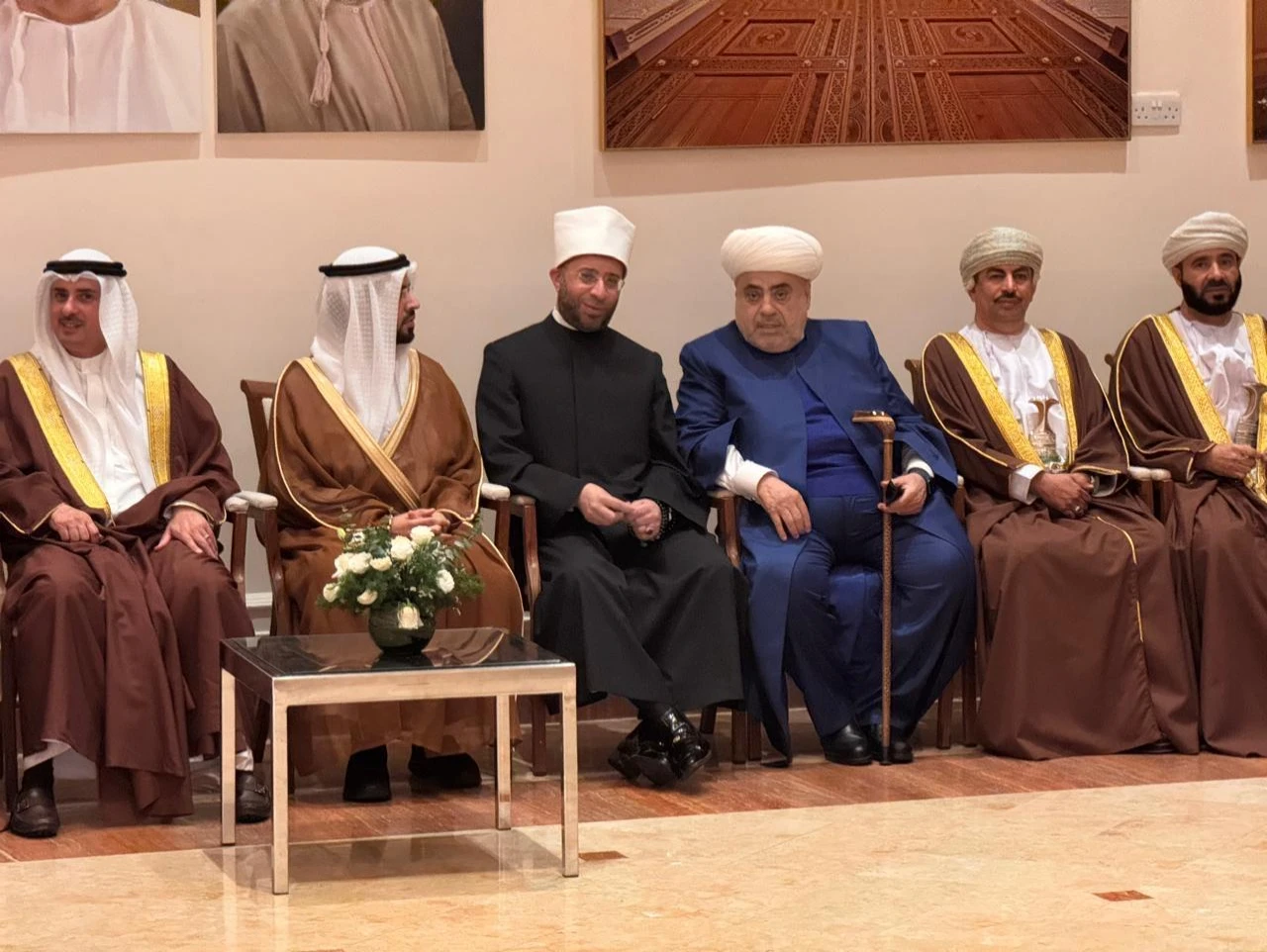
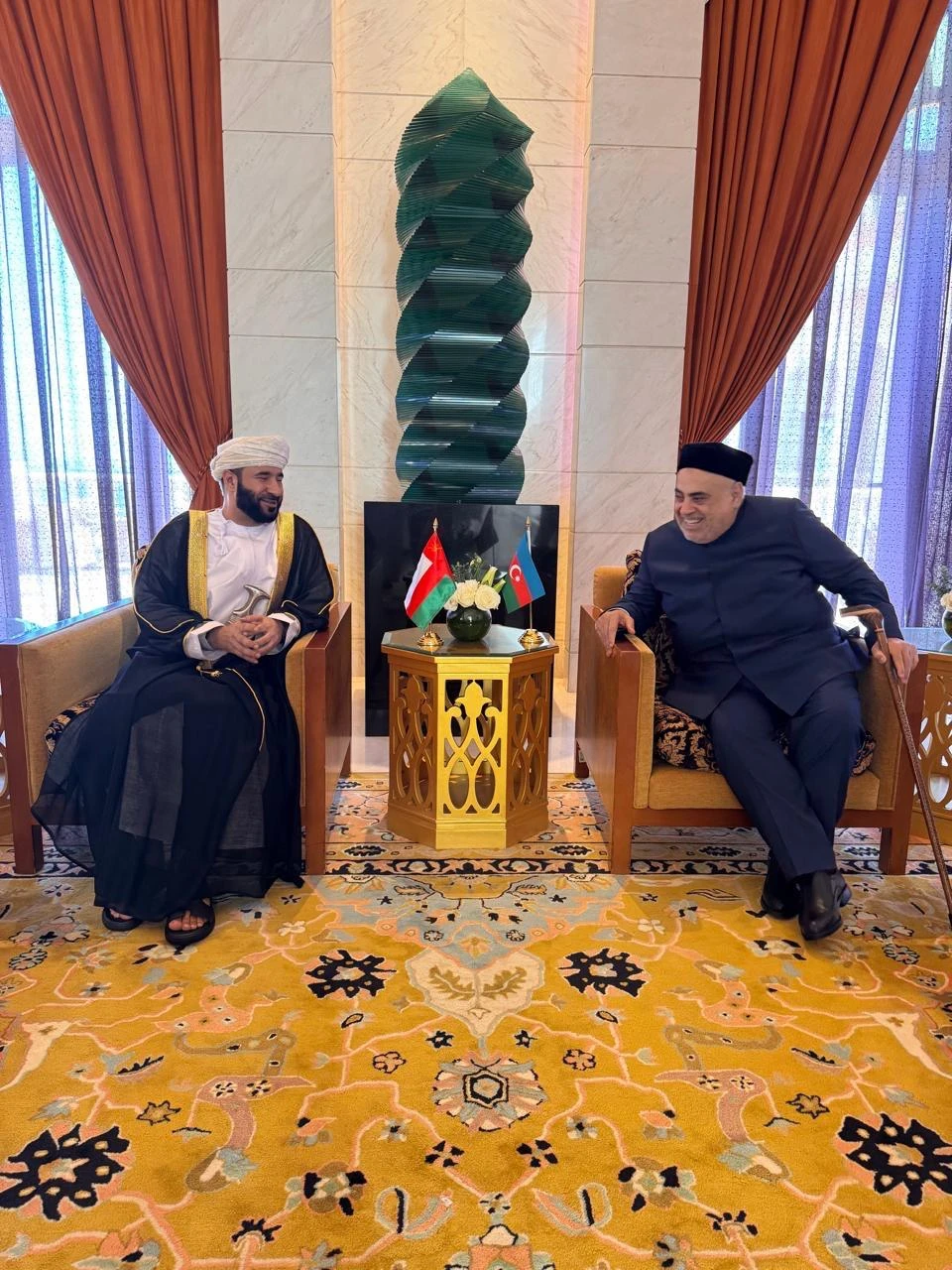
During the Muscat Plan of Action Forum and on its sidelines, the Chairman of the CMB held a number of bilateral meetings. Sayyid Badr Albusaidi, Minister of Foreign Affairs of the Sultanate of Oman, warmly greeted the Sheikh-ul-Islam and thanked him for taking part in the prestigious Forum. His Excellency Dr. Mohammed bin Said Al Mamari, Minister of Endowments and Religious Affairs of the Sultanate of Oman, cordially received Sheikh-ul-Islam A. Pashazade. He expressed his best wishes and spoke of the need to develop religious and spiritual ties between our countries.
The co-organisers of the Muscat Forum also met Sheikh-ul-Islam A. Pashazade and discussed prospects for future cooperation. They were Chaloka Beyani, UN Special Adviser on the Prevention of Genocide, and Dr. Mohamed Elsanousi, Executive Director of the Network for Religious and Traditional Peacemakers.
At a meeting with W. Cole Durham, President of the G20 Interfaith Forum Association, they discussed the Sheikh-ul-Islam's active participation in this platform. They also discussed upcoming events and activities of the Multifaith Advisory Council, established this year within the Association with the Sheikh-ul-Islam as a co-founder. Sheikh-ul-Islam A. Pashazade also had a warm meeting with Metropolitan Emmanuel Adamakis of Chalcedon, a member of the Advisory Council. They commended the tangible positive results of active cooperation among religious leaders on international platforms and discussed continuing these efforts.
The Muscat Forum continued its work with the presentation of the global implementation framework of the Muscat Plan of Action.
*CMB Press Service*